Posts Categorized: Uncategorized

5 Benefits of Seasonal Tune-Ups

5 Benefits of Seasonal Tune-Ups

At Hopkins Air Conditioning, Inc., it is our mission to help the residents of West Palm Beach keep their homes comfortable in every season. You can trust our NATE-certified technicians to handle any issues with your cooling and heating system.

After working with hundreds of home comfort systems in the Palm Beach area, we have come to the conclusion that seasonal tune-ups are one of the most valuable services we provide.

Preparing for a Cool Summer

The spring tune-up is a critical maintenance opportunity. Your air conditioner works hard in the Florida sun. Over time, regular operation can take its toll on your equipment. Dust and pollen will make its way into the machinery, and refrigerant levels will drop.

Furthermore, high humidity can increase the friction of moving parts, which slows them down. Your system will operate at a lower efficiency. If your air conditioner must work harder to cool your house, your utility bills will increase.

When the qualified experts at Hopkins Air Conditioning, Inc. examine your cooling system, they will make certain that everything is running as efficiently as possible. A maintenance technician will clean out any accumulated dirt and dust and lubricate all moving parts.

You can also trust the professional to make small adjustments that will keep your system running strong through the cooling season. You will reap the benefits of this work via a lower utility bill and a consistently cool home.

Getting Ready for the Heating Season

As a Florida resident, you may not be overly concerned about your heating system. The milder temperatures you experience mean that your furnace will sit idle for several months each year. However, when the cool nights of the winter season arrive, you will appreciate that your system is ready for action.

A fall tune-up is another way that you can keep your family comfortable. At this service appointment, our technicians will examine the entire system, checking for loose connections and worn parts. They will also make certain that your burner is set to an ideal mixture of fuel and oxygen.

Improper burning can lead to the production of carbon monoxide, a dangerous gas that is invisible and has no smell. By making certain that everything is set up properly, you will have a system that burns cleaner, producing less pollution and keeping your family safe.

Avoid Unexpected Breakdowns

One of the most important benefits of seasonal maintenance checks is that you can prevent emergency calls in the middle of the season. It is no fun to wake up during a hot summer night and realize that your air conditioner is malfunctioning. Seasonal maintenance can help protect you from an uncomfortable sudden breakdown. Our technicians can address small problems before they get worse.

The experts at Hopkins Air Conditioning, Inc. have worked with many home climate systems in the West Palm Beach area. They can easily recognize signs of impending problems. By replacing worn parts before the season begins, you’ll have the comfort of knowing your system is ready for the challenges ahead. If you sign up for one of our preventative maintenance agreements, you’ll receive these repairs at a 20% discount.

Extended System Life

You should want your current system to last as long as possible. Regular maintenance helps you to get the best value out of your equipment. The longer it runs, the less you will have to deal with annual costs over time. When you give your heating and cooling equipment the care it needs, it will give you a comfortable home for many seasons.

Most HVAC units will last over 15 years if you take care of them properly. Even if you think replacement is inevitable, squeezing a few extra years out of your current system will give you time to shop for a new one. Maintenance will help you to get the most out of your investment.

Your HVAC Maintenance Partner

Hopkins Air Conditioning, Inc. has a home comfort team that will keep your systems running at their best. We believe our annual maintenance agreements are a great value for West Palm Beach customers. When you sign up for a tune-up plan, your unit will receive an annual 20-point inspection and priority service.

Hopkins Air Conditioning, Inc. is the company you can rely on for all of your cooling, heating, and indoor air quality needs. We also provide air balancing and zoning installation services.

Contact us today to schedule your next seasonal tune-up.
Air Handlers vs. Furnaces: What’s the Difference

Air Handlers vs. Furnaces: What’s the Difference

When it comes to keeping your home comfortable during winter in Florida, it’s essential to have a reliable heating system. While Florida is known for its warm climate, the winters can bring cooler temperatures, making heating systems necessary. When choosing a heating solution, it’s important to understand the differences between your options.

In this article, we’ll explore the differences between air handlers and furnaces, two common systems used in Florida homes.

How a Furnace Produces Heat

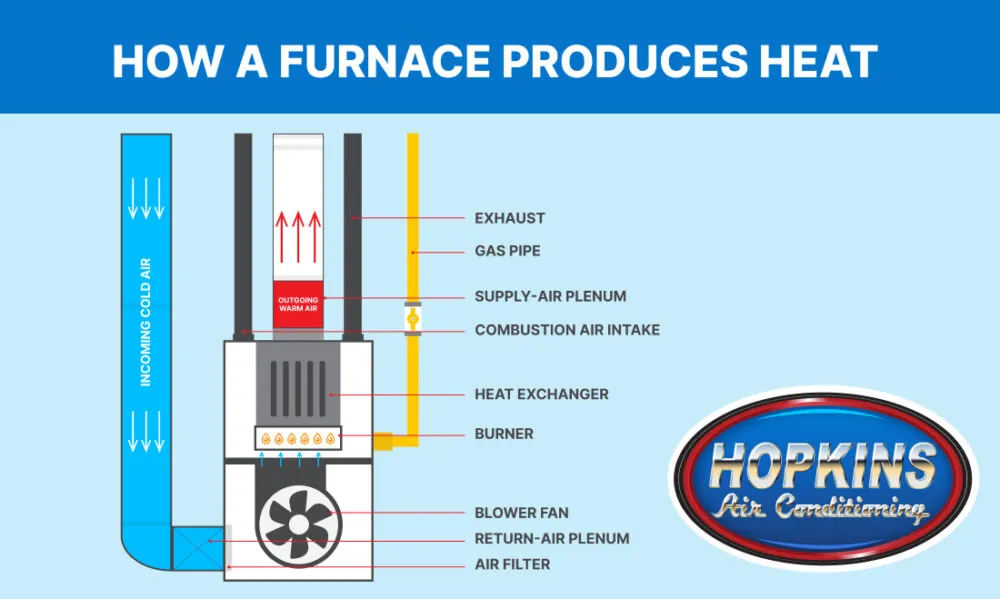
Graphic of how a furnace works

Furnaces are a popular choice for heating homes in many parts of the country, including Florida. These systems typically use one of two fuel sources: natural gas or electricity.

In gas furnaces, natural gas is burned in a combustion chamber. In electric furnaces, electricity is used to generate heat. The heat produced during combustion or electrical resistance passes through a heat exchanger.

This component transfers the heat to the air that’s circulated throughout your home. A blower fan pushes the heated air through a system of ducts and into your living spaces. A thermostat regulates the furnace by monitoring the indoor temperature.

How an Air Handler Operates

Air handlers are another option for heating homes in Florida. They work differently from furnaces and can distribute both warm and cool air.

An air handler unit contains a blower fan that circulates air through the system. When heating is required, the air handler uses a heating element or a heat pump to warm the air passing through it.

Air handlers often include filters and can help control indoor humidity levels, contributing to improved indoor air quality and comfort. Like furnaces, air handlers are controlled by a thermostat, ensuring your home maintains a consistent and comfortable temperature.

Do You Need a Furnace if You Have an Air Handler?

In Florida’s relatively mild winters, an air handler can often provide sufficient heating without the need for a furnace. Factors to consider include:

  • Energy-efficient air handling: Air handlers can efficiently distribute heated air throughout your home.
  • Year-round versatility: Unlike furnaces that only provide heating, air handlers can also handle cooling. This year-round functionality ensures you remain comfortable in every season.
  • Cost savings: Air handlers typically have lower operating costs than furnaces.
  • Comfort and indoor air quality: Modern air handlers often come with air filtration systems, enhancing indoor air quality and overall comfort in your home.

Air handlers can be a primary heating solution in Florida, offering efficient and versatile performance throughout the year.

Schedule an Air Handler Installation With Hopkins Air Conditioning

If you’re considering a heating solution for your Florida home, Hopkins Air Conditioning is here to help. Our expert technicians will discuss your heating needs and help you find the best solution for your home.

We offer:

  • Same-day service
  • Service for all brands
  • Free estimates on replacement quotes
  • Financing options
  • Upfront pricing

Don’t let Florida’s occasional chilly weather catch you off guard.

Call Hopkins Air Conditioning today at (561) 656-4870 to schedule a heating installation that will keep you comfortable all winter.

Air Conditioning Explained: Does Your System Use Gas or Electricity?

Air Conditioning Explained: Does Your System Use Gas or Electricity?

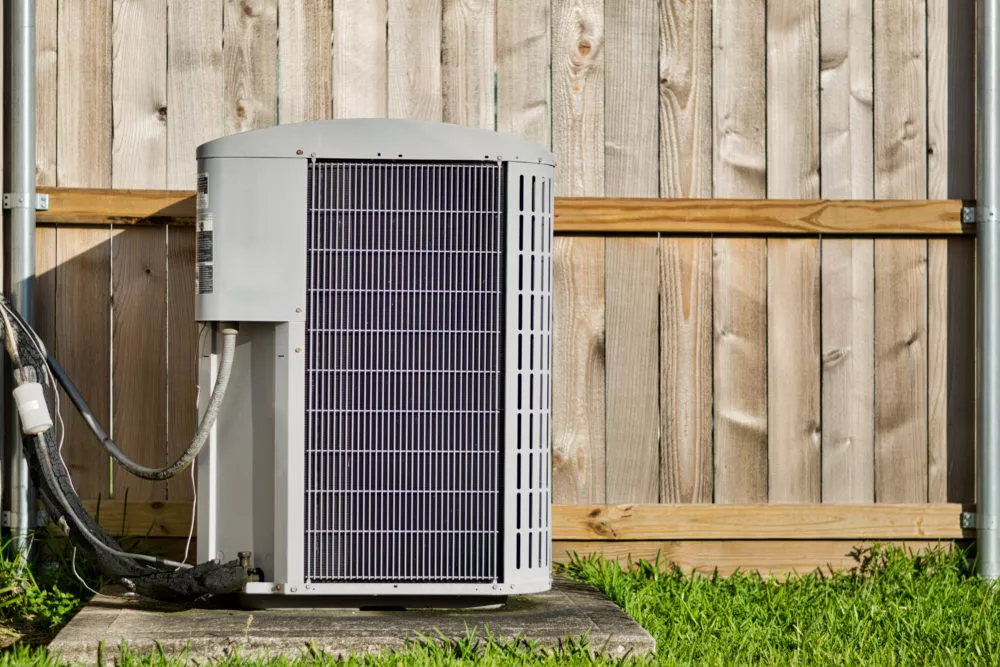
Outdoor AC unit next to wooden fence

Does My AC Use Gas To Run?

When it comes to keeping your home cool during the summer, a common question is, “Does my AC use gas?” Air conditioning units are electric systems, and they work in a fundamentally different way compared to gas-powered furnaces.

In this blog, we’ll discuss the inner workings of air conditioning systems, explore the available types, and help you make informed decisions about your home’s cooling needs.

Discover why we’re Florida’s favorite HVAC company by contacting us today to schedule your AC service.

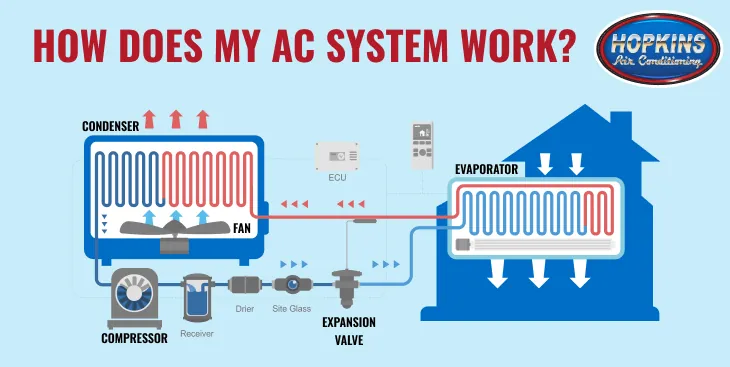
Graphic of how an AC works

How Does an AC System Work?

An air conditioner works by removing heat from the inside of a building, leaving the interior cool and comfortable. This process relies on the refrigerant cycle:

  • Evaporation: The refrigerant starts as a low-pressure gas in the evaporator coil inside your home. Warm indoor air is blown over the coil, causing the refrigerant to evaporate and absorb heat.
  • Compression: The gas is then compressed by the compressor unit, which increases its temperature and pressure.
  • Condensation: The hot, high-pressure gas moves to the condenser coil located outside your home. Here, it releases the heat it absorbed from indoors.
  • Expansion: The liquid refrigerant is then passed through an expansion valve, which undergoes a rapid pressure drop, turning it back into a low-pressure gas.

As a result, the indoor air temperature decreases, providing a cooling effect. The cycle continues until the thermostat senses that the desired indoor temperature has been reached, at which point the air conditioner temporarily shuts off. When the indoor temperature rises again, the cycle restarts to maintain the desired level of cooling.

It’s important to note that air conditioners don’t consume refrigerant like fuel; they circulate it through the system repeatedly and are electric-powered systems.

Different Types of Air Conditioners

There are various types of AC units available. Choosing the right one for your home depends on factors like your home’s size, your budget, and your cooling needs.

It can be difficult to decide the best unit type for your home. Relying on a professional can help you make an informed decision. HVAC experts are trained to evaluate a property and homeowner’s needs to choose the ideal AC unit.

AC units include:

  • Central air conditioning: Central AC systems distribute cool air throughout your home via ducts and vents. They use a centralized compressor unit located outside.
  • Ductless mini-split: Ductless mini-split systems consist of an outdoor compressor unit and one or more indoor air-handling units. These units are connected by refrigerant lines and require no ductwork.
  • Heat pump: Heat pumps are versatile because they can both cool and heat your home. They work similarly to ACs but can reverse the refrigeration cycle to provide heating during winter.
  • Geothermal heat pump: Geothermal heat pumps use the earth’s stable temperature to exchange heat. They’re highly efficient but require installation expertise.
  • Window air conditioning: Window ACs are self-contained units that sit in a window or a hole in a wall. They draw in warm air, cool it, and then expel the heat outside.
  • Hybrid air conditioning: A hybrid AC system can switch between gas heating and electric cooling by working alongside a traditional furnace.
  • Portable air conditioning: A portable AC can be moved from room to room. It draws warm air into the unit and cools it to release refreshing air.
  • Floor-mounted air conditioning: A floor-mounted AC system is ideal for areas with limited wall space. They’re installed close to the floor and collect warm air, cool it, and fan it out.

Schedule AC Installation With Hopkins Air Conditioning

At Hopkins Air Conditioning, we can help you select the perfect air conditioning system for your home. Our experienced technicians can answer all your questions and ensure a hassle-free installation process.

We’ve been proudly improving homes in Palm Beach County since 1988. Hopkins Air Conditioning offers same-day service, financing options, and free estimates on replacement quotes.

5 Common AC Compressor Issues

5 Common AC Compressor Issues

If you have an air conditioning system, you have an AC compressor. This important part of the cooling system must do its job, or your air conditioner won’t cool the home.

Thankfully, there are often signs that the compressor may have problems, and there are steps you can take to prevent this issue from causing a system breakdown and costly repair bill.

What Does an AC Compressor Do & How Does It Work?

Air conditioners work because the unit squeezes refrigerant in its gas form. It sends this pressurized, hot gas to the condenser, where it cools into a liquid, which then funnels it into the evaporator, where it becomes a low-pressure, cool gas.

This process takes heat out of your home and returns cool air through the ductwork. If the compressor doesn’t do its job, the entire process fails.

Signs Your Compressor Is About To Fail

If your air compressor is about to fail, it will show some common signs, such as:

  • AC blowing warm air
  • Condenser unit makes a weird sound
  • Tripped circuit breaker

If you notice these issues, consider calling for AC repair, so you aren’t left with a hot, uncomfortable home.

Common Reasons a Compressor Fails & How You Can Prevent It

Some of the common reasons for air compressor failure include:

  • Clogged air filter: If the air filter gets full of debris, your system must work harder to deliver cooled air. This puts strain on the compressor. Change the filter regularly to prevent this problem.
  • Dirty condenser coils: When the condenser coils get dirty, they don’t allow as much air to flow into the compressor. This causes the compressor to work harder, leading to a breakdown. Keeping the condenser coils clean prevents this problem.
  • Dirt inside the compressor: Dirt and moisture in the compressor can contaminate it, leading to failure. The best way to avoid this is to keep your system clean and change the filter through a routine maintenance appointment.
  • Issues with refrigerant: If you use too much refrigerant or use the wrong settings, the refrigerant can leak into the compressor cylinder, which creates negative pressure. To prevent this, have a qualified HVAC pro handle your refrigerant.
  • Oil leaks: If you have an oil leak somewhere in your air conditioner, it will lead to compressor failure. The oil can get into the suction line, and this will cause the compressor to fail. Regular maintenance will limit this risk.

Schedule AC Repair in West Palm Beach Today

Hopkins Air Conditioning has served the West Palm Beach community for over 40 years. We know air conditioners inside and out, and we’re passionate about helping you get the most function from yours. We work on both the air conditioner and ductwork to maximize your efficiency. If you need air conditioning repair due to compressor problems, you can count on us to get the job done right.

If you notice any of these issues or suspect a problem with your compressor, contact Hopkins Air Conditioning for help.

Call our West Palm Beach technicians at 561-656-4870 or contact us online to learn more about our AC repair services.

Advantages of Air Balancing Service

Advantages of Air Balancing Service

If you’ve ever noticed inconsistent temperatures in different areas of your home in West Palm Beach, your HVAC system could benefit from air balancing service. Air balancing is a process that involves measuring the performance of your system to ensure optimum comfort and HVAC performance in each room. The following are just a few advantages of air balancing service.

Longer Lifespan for HVAC Equipment

There’s no doubt that whenever an HVAC system is under stress, it has to work harder to heat and cool your home, resulting in unnecessary wear and tear. Good airflow achieved by air balancing prevents potentially harmful substances like dust, pet dander, mold, and other buildups from collecting in your heating or air conditioning equipment.

Enhanced Comfort Levels

If your home doesn’t receive enough cool or warm air whenever temperatures fluctuate, your home can feel very uncomfortable. Air balancing is designed to target and eliminate hot or cold spots throughout your home, resulting in stable comfort levels.

Improved Energy Efficiency

The performance of your heating and cooling systems is directly related to airflow. Improper airflow in your home will require your system to work harder to keep temperatures at your ideal comfort level. The harder your system has to work, the greater your energy bills will be. Air balancing ensures that energy produced by your HVAC system isn’t wasted.

Could Eliminate the Need for Replacing Your System

You may believe it’s necessary to replace your entire HVAC system if it’s failing to properly heat or cool your home. However, in certain instances, air balancing can help to restore your system to maximum operating capacity by eliminating uneven airflow from room to room.

May Pinpoint Additional Underlying Issues

By testing your HVAC system for airflow inconsistencies, an HVAC professional may gain a better understanding of the performance of your system. Underlying issues your HVAC technician may be able to identify during the process include blockages, loose ductwork and damaged or leaky air ducts.

Contact the Experienced HVAC Professionals

Our technicians perform a full range of heating, cooling, and air quality inspection services. For more information on what you can do to ensure optimum airflow in your home, contact Hopkins Air Conditioning, Inc. today. You can count on us for quality HVAC service from start to finish.

What Are the Signs of AC Contactor Failure?

What Are the Signs of AC Contactor Failure?

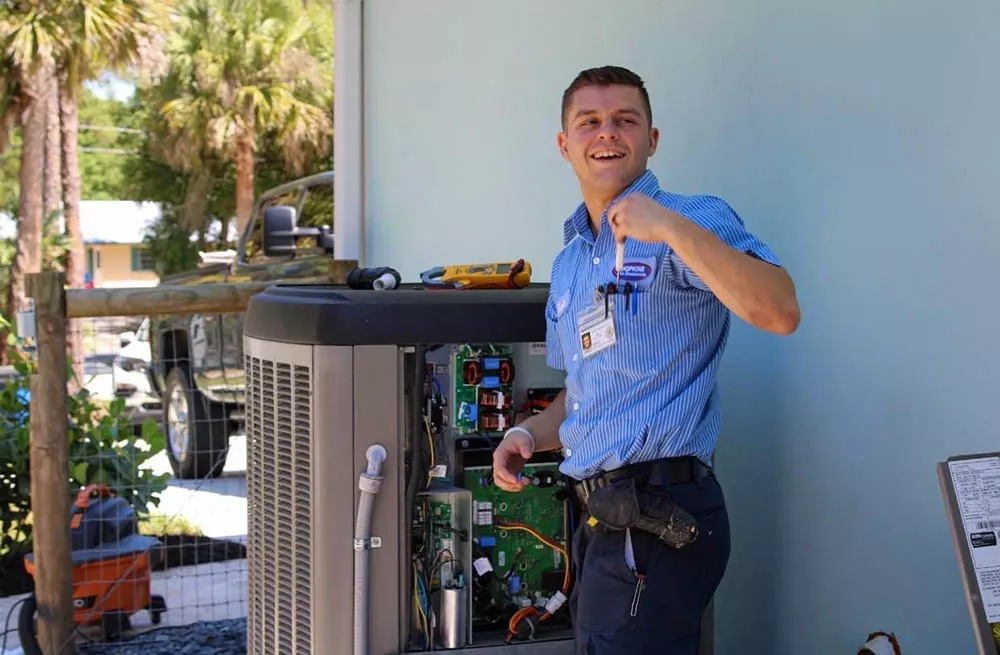
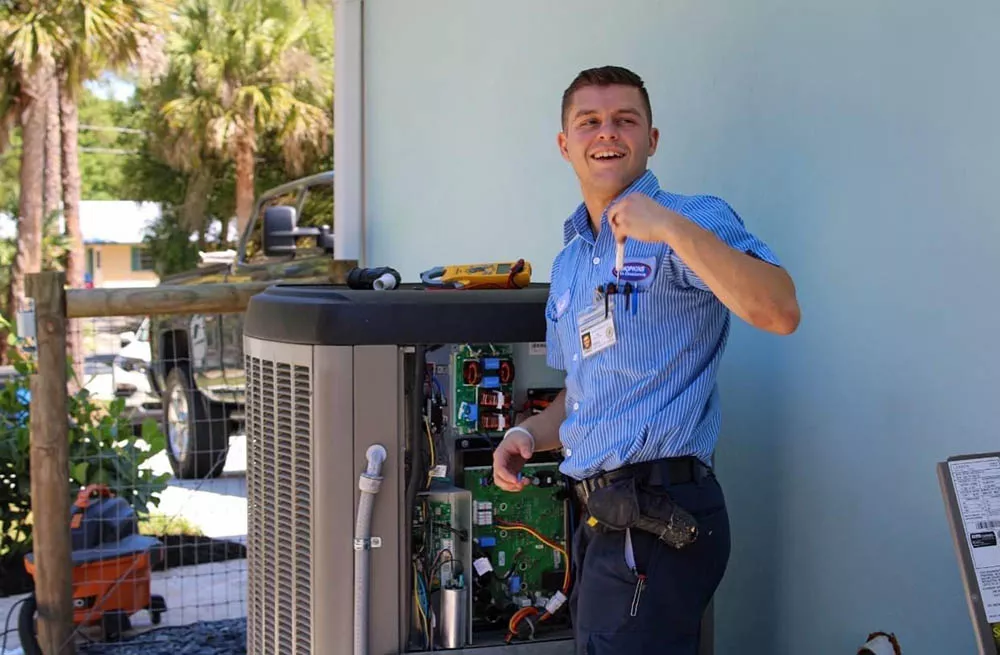
Hopkins repair technician working on an outdoor AC unit

For West Palm Beach homeowners, understanding the condition of your AC system is important for maintaining a comfortable and efficient home environment, especially with our hot, humid weather.

A key part of an AC system is the contactor. It needs to work properly to keep your HVAC system running smoothly. But when it fails, it can lead to several problems affecting your comfort and the system’s efficiency.

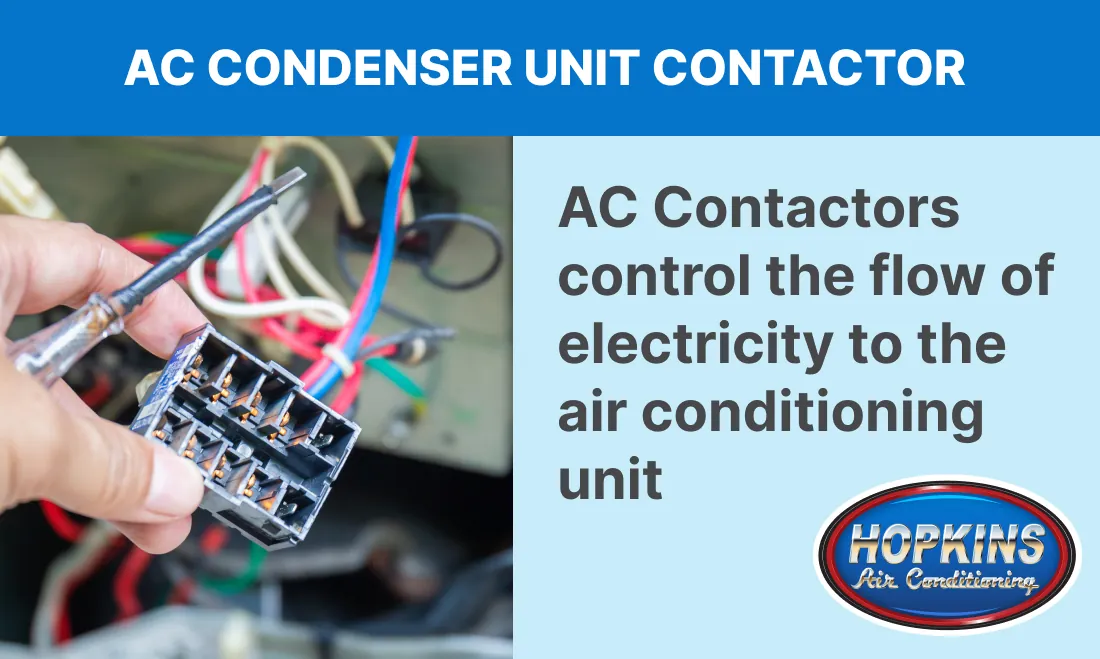
Close up image of an air conditioning contactor

What Is an AC Contactor?

An AC contactor is an electrical component in your AC system that controls the flow of electricity to the air conditioning unit. It’s like a switch, engaging and disengaging the electrical connection based on the thermostat.

When the thermostat signals the need for cooling, the contactor closes, allowing electricity to power the system. It needs to work properly for the system to operate and start cooling when you need it.

What Happens When the Contactor Is Faulty?

A faulty contactor often stops closing, which means even if your thermostat is signaling for cooling, the AC unit won’t receive the power it needs to start. This disconnection can leave you sweaty and uncomfortable, especially during summer.

To test for a bad contactor, you need to check for an electrical connection when the contactor is engaged. A lack of continuity means there’s a failure, and you need professional inspection and repair.

How To Tell if a Contactor Is Bad

Discovering your AC won’t turn on can be frustrating, especially during the summer. There are common signs of a failed contactor, so homeowners know what to look for.

AC Won’t Turn On

If your thermostat is on but your AC shows no signs of life, it could be from a failed contactor. This is often the first sign of a problem since the contactor’s failure to engage stops power from reaching the AC, making it inoperative.

Unusual Noises

A chattering or buzzing noise from the AC can mean the contactor struggles to maintain a stable connection. These sounds happen when the electrical contacts inside the contactor fail to form a solid connection, causing intermittent or weak engagement that can lead to system failure.

Physical Damage

Visible signs of wear, like pitting on the contactor itself, can stop its function and signal the need for replacement. Over time, the electrical arcs that happen during the switching process can wear out the contact points, leading to poor conductivity and the inability to maintain a circuit.

Electrical Issues

If testing shows the contactor has no continuity, or if there are visible signs of burning or arcing, it’s a clear sign of failure. A multimeter can be used to check for continuity, but without it, the contactor can’t conduct electricity. It needs immediate attention to prevent further damage to your AC.

Get Professional AC Repair From Hopkins Air Conditioning

At Hopkins Air Conditioning, we understand how important your comfort is and the role your AC contactor plays in keeping your home cool.

With our commitment to quality service, including same-day service, free estimates on replacement quotes, and a team of certified, background-checked technicians, we help keep your system operating at its best.

Our West Palm Beach family-owned and -operated business has helped area homeowners for over 40 years. We service all brands and offer financing options and upfront pricing for our services.

If you’re noticing signs of AC contactor failure, let us help you. With our expertise and commitment to customer satisfaction, we’re here to ensure your home remains comfortable and your system is efficient.

Schedule your AC service with Hopkins Air Conditioning by calling (561) 656-4870 today.

8 Air Conditioner Myths That Could Be Losing You Money

8 Air Conditioner Myths That Could Be Losing You Money

couple by the thermostat looking at an energy bill

Even if you enjoy West Palm Beach’s steamy climate, there’s just nothing like a cold, high-performing air conditioner on a hot summer day. When the temperatures start to rise this summer, many homeowners will be searching for ways to lower their energy bills. But before you make any changes around the home, let’s dismantle a few air conditioning myths that are costing you time and money ― and uncover the truth so that you can save energy and money.

Myth #1: Turning Off Your AC When You Leave Home Will Save You Money

With over 45 years of experience in the HVAC industry, we’ve discovered that far too many Floridians turn off their air conditioners daily when they leave the house. It may seem like you are saving money, but turning off your HVAC system when you leave the house may create more problems that lead to additional expenses. When you return home, the cooling process works harder to restore your house to a comfortable temperature ― even if you’re only gone for a few hours. Because your AC unit serves an important role in humidity management, it is a key component in minimizing indoor air quality issues. If it rains while you’re gone, for example, the humidity that forms can attract mold and pests into your home.

Turning off your AC unit when you leave home for an extended period (or the whole summer) can also be counterproductive. While you’ll save money, airflow becomes stagnant, and your home’s temperature will get extremely hot when your system isn’t circulating.

If you want to save money when you’re gone, we suggest that you set the thermostat 7 to 10 degrees higher and avoid temperatures lower than 78 degrees ― instead of just turning it off.

Myth #2: Turn Your Thermostat Low to Quickly Cool Your Home

Temperature settings on your thermostat or control system do not correlate with the speed of cooling. Your thermostat does not work like a volume knob that you can turn up to 20 to cool your home, because HVAC systems cannot vary their cooling energy output. Therefore, setting your control system lower to quickly cool your home will waste energy and cost you more.

The speed at which your air conditioner cools your home depends on the weather, the amount of cool air your home has stored, how well air-sealed and insulated your home is, and the age and efficiency of your HVAC system. Rapidly lowering the thermostat will force your system to cycle on and off more than it needs to, creating unnecessary strain and higher energy costs.

Contact Hopkins Air to learn more about our smart thermostat products. Call us at 561-656-4870 or contact us online to learn more!

Myth #3: Your Air Conditioner Will Give You a Cold

This is simply not true. Exposure to germs, bacteria, and viruses causes colds, not cool temperatures! Air conditioners recycle those germs throughout your home each time they are turned on. AC maintenance and tune-ups can help you keep your system working efficiently and effectively, sending stale air (and its germs) out and keeping clean, fresh air in. Annual service on your unit can not only reduce the allergens in your home but also extend the life of your system.

Myth #4: The Bigger the AC Unit, The Better

“Bigger is better” is one of the most widespread home cooling myths. AC units are carefully sized to the number of cubic feet they need to cool. An air conditioner that is too small for your home will always be overworked, so it’ll wear out faster, and it’ll never quite meet the demands of the thermostat. If the AC unit is designed for a larger space than you have, it will constantly turn on and off, wearing itself out and growing undependable over time.

Be mindful of a unit’s capacity and choose the right one for the space you have. Before you install a new air conditioner, seek the guidance of a certified professional who knows how to adequately size your AC for your home.

Myth #5: Let Your Air Conditioner Run Until It Quits

Although the initial cost of replacing your AC unit can be high, keeping your old air conditioner even when it’s past its prime can cost you more in the long run. An old air conditioner will perform poorly and drive up energy costs, and it’s more prone to expensive and time-consuming malfunctions.

If your AC unit is 10 years old or older, it may be time to invest in a newer, more efficient version that will save you money and aggravation.

Myth #6: Closing HVAC Vents to Certain Rooms Will Improve Home Cooling and Save Energy

When you close vents to unused rooms or certain rooms on different levels in your home, you could throw off the balance of your system or affect the way air is circulated, resulting in uncomfortable temperatures throughout the rest of the house. This imbalance can subsequently damage the HVAC system or create cracks in the ducts that may reduce the cooled space. Additionally, the more vents you close, the more air backs up into the ductwork, causes back pressure to build, and creates reduced efficiency in your home’s HVAC system.

Before closing vents, discuss your concerns with a trusted, licensed HVAC dealer who will be able to help you decide whether certain vents can be closed to reduce the amount of space in your home that is being cooled.

Myth #7: Ceiling Fans Will Keep a Room Cool

If you’re considering installing ceiling fans in your West Palm Beach house, make sure you understand the home cooling myths associated with fans. First and foremost, a ceiling fan is designed to recirculate the air already in the room. Fans aid in the evaporation process and make us feel cool, but they do not actually cool rooms. In other words, fans won’t increase your air conditioning system’s power, capacity, or efficiency, cannot produce cold air, or affect the overall temperature in a room, regardless of the size or number of fans. But the breeze they produce sure does feel good! That added air movement may encourage you to set the thermostat at a higher temperature ― which in turn will decrease your energy usage.

Myth #8: AC Units Don’t Need Maintenance

So far from the truth! Whether your AC system is six months or 10 years old, professional HVAC maintenance is important. Routine inspections are one of the wisest choices you can make to preserve your HVAC unit. They’ll help you discover small issues before they turn into big ones, and they’ll help you prepare for hot weather by making sure every part of your unit is tuned, lubricated, tightened, and cleaned. The best time to schedule an inspection or tune-up is in the spring ― even if you just purchased a replacement in the fall. Since a new cooling system is a big investment, keeping it running like new is ideal.

Before the stifling heat arrives in Florida, make sure your air conditioner is ready to get to work!

Quality HVAC Service from Hopkins Air Conditioning

Home cooling myths can be extremely counterproductive. Having a better understanding of how to properly take care of your air conditioning system will help you avoid the unexpected. That’s why we at Hopkins Air Conditioning hire certified technicians who care and do our best to educate West Palm Beach residents and the surrounding community.

Call us today at 561-656-4870 to purchase a replacement unit or schedule routine hvac maintenance or repair for your existing AC system.

5 Benefits of HVAC Maintenance

5 Benefits of HVAC Maintenance

The HVAC system of your home is designed to provide you with a controlled environment in which you feel comfortable throughout the year. When the system does not perform, you call an HVAC expert to make the necessary repairs. Often, homeowners can save money with routine maintenance in the spring and fall. Here are five benefits of HVAC maintenance by an experienced technician at Hopkins Air Conditioning, Inc..

1. Prevent Expensive Repairs

Routine HVAC maintenance reduces the costs of repairs by ensuring that the equipment has the fluids, belts, and other parts that it needs to run. Maintenance services at Hopkins Air Conditioning, Inc. also include looking for signs of wear and tear.

2. Lower Energy Costs

If your energy bills are rising each year, HVAC maintenance services can help. The technician checks the entire system for any leaks, damage, or faulty parts that make your equipment work harder and use more energy.

3. Better Indoor Air Quality

Your HVAC system filters air to remove dust, pollen, pet dander, odors, and other airborne particles. Routine HVAC maintenance services include filter changes to keep the air in your home clean.

4. Longer Equipment Lifetime

Broken parts, low fluids, and faulty wiring burden your HVAC system as it tries to heat and to cool your home. This shortens the lifetime of the equipment. HVAC maintenance service technicians find small problems early so you can enjoy the benefits of your investment for many years.

5. Consistent Indoor Temperatures

Uneven temperatures inside your home indicate that the system is not working properly. HVAC maintenance services are a proactive way to keep the system operating efficiently so it maintains even temperatures in every room.

Rely on the Experts

In Palm Beach and the surrounding areas, rely on the experts of Hopkins Air Conditioning, Inc. for your HVAC maintenance services. We specialize in the installation, maintenance, repair, and servicing of heating and cooling systems as well as indoor air quality. To learn more about the benefits of HVAC maintenance, contact Hopkins Air Conditioning, Inc. today.

Five Benefits of Extended Warranties

Five Benefits of Extended Warranties

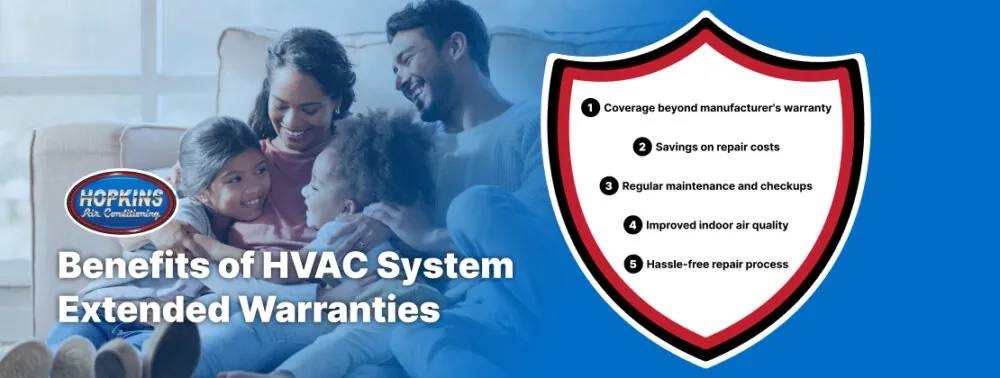
Graphic of benefits of HVAC extended warranties

When you purchase HVAC systems, appliances, vehicles, and electronics, a manufacturer’s warranty is often included. Depending on the item, it could be a 30-year warranty or longer. If your item makes it through the warranty unscathed, that’s great because you don’t have to go through the claims process. Unfortunately, not everyone is so lucky.

Here are five benefits that extended warranties offer.

Why to Get an Extended Warranty for Your HVAC System

1. Peace of Mind

The reason you purchase an insurance policy is for the peace of mind. An extended warranty works similarly to insurance. Most consumers purchase this warranty because they bought an expensive appliance or electronic device.

If it fails to operate within a specific period, you’re protected against financial loss. At Hopkins Air Conditioning, we’ve noticed that extended warranties are very helpful when it comes to owning HVAC equipment.

2. Repairs

An extended warranty allows you to put in a claim for repairs. You’re covered as long as the reason falls under the warranty parameters. When you purchase the coverage, just be sure you understand what’s covered and what isn’t.

3. Replacement

If your appliance stops working completely and the reason it stopped working is covered, you’re entitled to a complete replacement.

4. Food Spoilage Protection

Those who purchase refrigerator coverage may be covered for loss due to food spoilage. This is great protection for professionals in the food industry, like restaurant owners.

5. Savings Over Time

Whenever you acquire an insurance policy or extended warranty, you’re protecting yourself against financial loss. Ideally, when you acquire an extended warranty, the item will live out its full lifespan. But if something does go wrong, you’re protected. This saves you money over time.

For more information about the benefits of extended warranties, contact Hopkins Air Conditioning. We also provide heating, cooling, and air quality services in West Palm Beach, FL.

The Benefits of an Extended Warranty for Your HVAC System

An extended warranty for your HVAC system offers many benefits that can provide peace of mind and long-term savings. Here are some of the benefits of investing in an extended warranty for your HVAC system:

  • Coverage beyond the manufacturer’s warranty: An extended warranty provides additional protection for your HVAC system, covering unexpected repairs that may not be included in the manufacturer’s warranty.
  • Savings on repair costs: With an extended warranty, you won’t have to worry about the high cost of unexpected HVAC repairs, potentially saving you hundreds or thousands of dollars in repair costs over the lifetime of your system.
  • Regular maintenance and checkups: Many extended warranties include regular maintenance and checkups, which ensure your HVAC system is operating at optimal efficiency and prolong its lifespan.
  • Improved indoor air quality: Regular maintenance and checkups can also improve the indoor air quality of your home, reducing allergens and pollutants in the air.
  • Hassle-free repair process: With an extended warranty, you can enjoy a hassle-free repair process. Our experienced technicians will handle everything from diagnosing the problem to repairing or replacing parts.

Contact Hopkins Air Conditioning to discuss a new AC installation in West Palm Beach.

2024 SEER Ratings: What To Know About the New HVAC Efficiency Standards

2024 SEER Ratings: What To Know About the New HVAC Efficiency Standards

Rising utility bills are a common problem throughout Florida, and many homeowners are shocked to discover just how much more it costs to cool their homes this year than last. While you can’t control utility rates, you can invest in an energy-efficient cooling system to reduce utility usage.

To that end, it’s important to understand SEER ratings and the latest requirements to select a suitable air conditioning system for your home, condo, or apartment. There were some significant changes this past year, and the team at Hopkins Air Conditioning can help you navigate your options to find the right one.

What Are HVAC Energy Efficiency Standards?

Seasonal energy efficiency ratio, or SEER, ratings began in the early 1990s. Overseen by the Department of Energy, these standards measure the efficiency of your air conditioning system over the summer. The higher your rating, the more energy-efficient the central air conditioner, ductless mini-split, heat pump, etc.

SEER ratings are similar to energy efficiency ratio, or EER, ratings. The EER measures the cooling capacity of your system by comparing the cooling output in British Thermal Units (BTU) versus energy input in watts. As with SEER ratings, the higher the ratio, the more energy-efficient the system.

Where SEER considers a range of temperatures and humidity, EER is more general and applies to the anticipated climate, i.e., hot, dry, cold, coastal, etc. Thus, both are good measurements, but it’s important to understand their differences when reviewing potential AC replacements so you can choose a system best-suited for our climate in Florida.

What’s Changed From 2023?

The biggest changes were in relation to testing conditions, data values, and the metrics used to assess installed systems’ performance accurately. Referred to as SEER2, EER2, and HSPF2, the updated standards are more stringent and designed to create a more accurate test result.

All HVAC systems sold or installed in the U.S. must comply with the updated standards. In addition to these standards, new air-source heat pumps must have a minimum of 8.8 HSPF. All new furnaces must have an AFUE of 81% or greater. Standards for single-package heat pumps remain unchanged.

It’s important to note that non-compliant air conditioners cannot be sold/installed in West Palm Beach and the southern region. However, you can still purchase and install non-compliant heat pumps if the unit was manufactured before Jan. 1, 2023.

Minimum SEER Ratings for 2024

For 2024, the minimum SEER ratings for the southeast and the northern region are as follows:

AC <45,000 BTU/hr

14 SEER / 13.4 SEER2

15 SEER / 14.3 SEER2

AC >45,000 BTU/hr

14 SEER / 13.4 SEER2

14.5 SEER / 13.8 SEER2

Split-System Heat Pump

15 SEER / 14.3 SEER2

15 SEER / 14.3 SEER2

Single-Package Heat Pump

Unchanged

Unchanged

Further, it’s important to remember that the Inflation Reduction Act offers considerable tax credits for purchasing and installing energy-efficient heating and cooling systems. However, to qualify, homeowners must select systems that are ENERGY STAR®-certified and exceed these SEER2, EER2, and HSPF2 minimums:

  • Split system AC: 16 SEER2
  • Packaged AC: 15.2 SEER2 and 11.5 EER2
  • Ducted split heat pump: 15.2 SEER2, 7.8 HSPF2, and 11.7 EER2
  • Packaged heat pump: 15.2 SEER2, 7.2 HSPF2, and 10.6 EER2
  • Mini-split system: 16 SEER2, 9 HSPF2, and 12 EER2

Why Choose Hopkins Air Conditioning?

At Hopkins Air Conditioning, our licensed and insured HVAC technicians maintain the up-to-date knowledge required to ensure your comfort and the maximum energy efficiency of your heating and cooling systems. We proudly serve clients throughout Palm Beach County and will help you find superior solutions for your desired comfort and budget.

Contact Hopkins Air Conditioning to learn more about the 2024 SEER efficiency standards and to schedule a service in West Palm Beach, FL, today.

SCHEDULE