
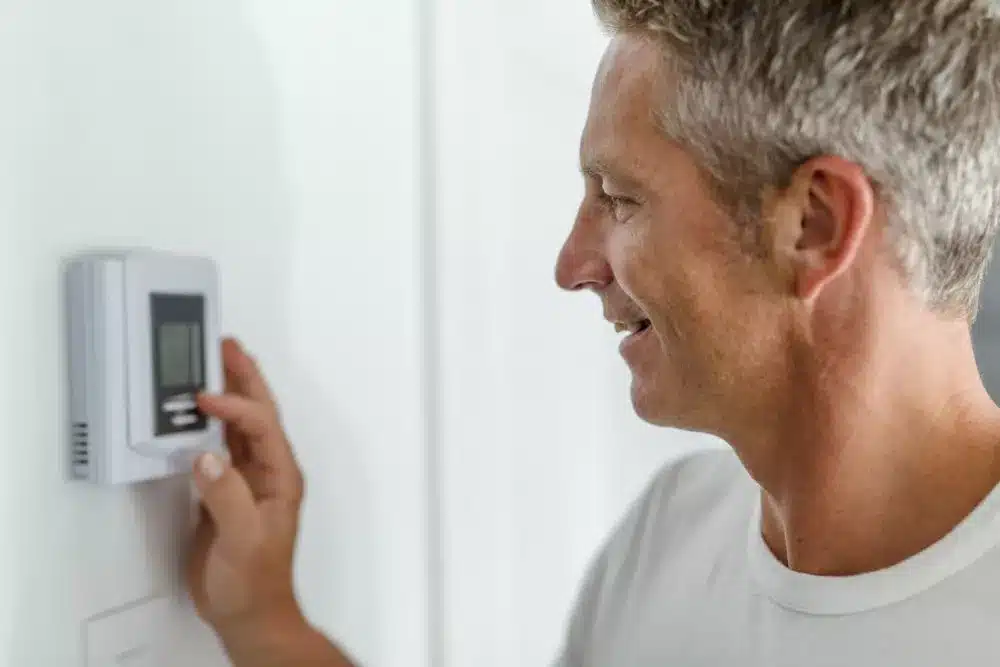
The Winter Thermostat Setting That Keeps a South Florida Home Warm and Dry
For most South Florida homes, the right winter thermostat setting is about 68 to 70 degrees while you're home and awake. With a heat pump, keep overnight and away setbacks small to avoid costly backup electric heat. On mild, muggy afternoons, a short cooling run removes moisture that heat mode leaves behind.
West Palm Beach winters bring cool mornings, occasional cold fronts, and many afternoons when the AC still works. Typical thermostat settings for cold winters need adjusting here.
Hopkins Air Conditioning has worked on West Palm Beach HVAC systems. Below, we match the right thermostat setting to each winter situation and show how to keep backup heat off your bill.
What Is the Ideal Winter Thermostat Setting in West Palm Beach?
The ideal winter thermostat setting in West Palm Beach is about 68 to 70 degrees. The U.S. Department of Energy's Energy Saver guide recommends this range when you're home and awake. A setback is a planned drop in the thermostat setting while you're asleep or away, and the DOE suggests one in winter.
Heating is a small job here. The National Weather Service Miami daily normals for Palm Beach International Airport show January highs around 75 degrees and lows around 58-59 degrees.
For the warm months, see our recommended thermostat settings for Florida summers.
Heat Pump or Electric Furnace: Your Equipment Decides How Far to Set Back
Heat pumps require smaller setbacks, while an electric furnace can be set back further. Furnace thermostat settings in West Palm Beach usually refer to electric heat. The U.S. Energy Information Administration heating fuel survey found that 66 percent of Florida homes heat mainly with electricity.
A heat pump is a heating and cooling system that moves heat rather than makes it, pulling warmth from outdoor air in winter. Auxiliary heat is a set of electric heat strips in the indoor unit that turns on when the heat pump can't keep up on its own, often shown as AUX on heat pump thermostats.
Heat Pump Homes: Small Setbacks, No Surprise Strip Heat
The DOE says programmable thermostats aren't generally recommended for heat pumps because a heating setback can cancel the savings. A moderate setting is the most cost-effective practice. Keep any setback to a couple of degrees and skip it if the AUX light comes on every morning.
Electric Furnace Homes: Standard Setback Advice Applies
An electric furnace or strip heat has no cheaper heat source to give up during warm-up. So the winter furnace thermostat setting in West Palm Beach can follow the DOE's standard advice: a 7- to 10-degree setback for 8 hours a day can save as much as 10 percent a year on heating and cooling.
Recommended Thermostat Settings in West Palm Beach
Here are recommended thermostat temperatures for each winter situation in West Palm Beach, based on DOE data.
Winter Thermostat Setting Decision Table for West Palm Beach Homes
| Situation | Heat Pump | Electric Furnace or Strip Only |
|---|---|---|
| Home and awake | 68 to 70 degrees (DOE) | 68 to 70 degrees (DOE) |
| Asleep | A couple of degrees lower, if AUX stays off | 7 to 10 degrees lower for 8 hours (DOE) |
| Away for the workday | Moderate setting, or a heat pump smart thermostat | Lower setting |
| Away for the holidays | Never off: moderate heat, cooling available | Never off: lower heat, cooling available |
| Cold front night | No setback | Usual setback |
| Mild, humid afternoon | Short cooling run | Short cooling run |
Cold Front Tonight: Hold Steady Instead of Turning the Heat Up
On a cold front night, skip the heat pump setback and hold your daytime setting until the front passes. As outdoor air cools, a heat pump gathers less heat while your house loses it faster. The strips are most likely to kick in during a big morning warm-up.
On a chilly morning, setting the temperature much higher won't make a heat pump catch up faster. But a big gap between the room temperature and the setting can make many thermostats call in the strips.
Emergency Heat Is a Backup Plan, Not a Faster Way to Get Warm
Use emergency heat only when the heat pump has stopped working, and schedule a repair right away. Emergency heat is a thermostat setting, often labeled EM HEAT, that shuts off the heat pump and heats the house with electric strips alone.
The U.S. Department of Energy says backup heat usually costs more to run and advises against any setback that turns it on. Call for service if:
- The display reads EM HEAT, and nobody switched it.
- AUX stays lit for long stretches on mild nights.
- The outdoor unit sits silent while the heat runs.
Those are jobs for our heating and heat pump repair team, since refrigerant and electrical work belong with a licensed technician.
Chilly Mornings, Muggy Afternoons: Switching Between Heat and Cool
On days that start chilly and turn muggy, Auto mode switches between heating and cooling so you don't have to flip modes by hand. Auto mode is a thermostat setting that picks heating or cooling on its own, using a heating setting and a separate cooling setting a few degrees higher.
It also helps with humidity, because your system removes moisture only in cooling mode. Condensate is the water your system pulls from the air, drips off the cold indoor coil, and drains through the drain line.
Heat mode warms air without drying it, so a short cooling run keeps a mild, humid afternoon from turning clammy. Our guide to the ideal indoor humidity level for Florida homes explains the target.
How a Smart Thermostat Can Save The Day: A Customer Experience
Mike Collins was in New York when his remote thermostat showed his Palm Beach Gardens condo at more than 80 degrees. His regular HVAC company couldn't get there for quite a while. The cooling failure led to a system replacement and shows why remote monitoring matters.
He wrote:
“I was in NY and noticed by remote thermostat that my condo in Palm Beach Gardens was at 80+ degrees. I called my regular HVAC service company and they said they couldn’t get there for quite a while. My brother-in-law found a Hopkins repairman around the corner, so I engaged them to replace my HVAC system immediately. They were fast, neat and thorough. The price was just what I had expected, and there were no unexpected costs."
The price matched what he expected, with no unexpected costs, and the city of Palm Beach Gardens inspected and approved the work. With the city's approval on record, Mike closed his review by recommending Hopkins Air to anyone who needs HVAC care. Read Mike's full Google review.
Holiday Travel Thermostat Recommendations for South Florida Homes
Leave the system on while you're away for the holidays, with moderate heat and cooling available for muggy stretches between fronts. An off system can't keep moisture in an empty house in check.
A smart thermostat is a Wi-Fi-connected device you can check and adjust from a phone app. Many models alert you when the house drifts too warm or cool. ENERGY STAR says homes with high heating and cooling bills or homes unoccupied much of the day can save about $100 a year with a certified smart thermostat.
Our pre-trip HVAC checklist for holiday travel covers the rest.
HVAC Know-How Behind Every Smart Thermostat We Install
A smart thermostat saves money only when set up for the system it controls. A heat pump with backup strips needs one that knows which heat source to call first. Hopkins Air has installed and serviced the heat pumps and heat strips these thermostats run, with NATE- and NCI-certified technicians on every call.
We're a Carrier Factory Authorized Dealer. We set up smart thermostats and compatible models with phone app control, schedules, and temperature alerts. We service all makes and models and keep technicians available 24/7.
For a thermostat that keeps watch while you're at work, asleep, or out of state, schedule a smart thermostat installation with Hopkins Air.
Winter Thermostat Setting FAQs
How Can I Tell If My Home Has a Heat Pump or an Electric Furnace?
If your outdoor unit runs while the heat is on, you have a heat pump; if only the indoor unit runs, your heat comes from electric strips or a furnace. A heat pump thermostat usually offers an emergency heat setting and may show AUX on the display, which a thermostat for a system with strip heat alone typically won't. The model label on the outdoor unit and your installation paperwork will also name the equipment type. Knowing your system type tells you how far you can safely set your winter thermostat back.
Why Does My Thermostat Show Aux Heat During a Cold Front?
A thermostat shows aux heat during a cold front because the heat pump can't reach the setting on its own as outdoor temperatures drop, so the electric heat strips step in to help. Aux heat also tends to kick in after a big overnight setback while the system works to recover. Short stretches of aux heat on the coldest nights are normal for a heat pump. Aux heat running for long stretches on mild nights isn't normal and points to a heat pump problem a licensed technician should diagnose.
Is 72 Degrees Too Warm for a Winter Thermostat Setting in Florida?
A winter thermostat setting of 72 degrees won't hurt your equipment, but it sits above the 68 to 70 degree range the U.S. Department of Energy recommends while you're home and awake. Setting it to 72 degrees means the heat runs more on cool mornings and evenings, so 68 to 70 degrees is a better target for energy use. If someone in the household needs the extra warmth, 72 degrees is a reasonable choice, especially when a heat pump holds that setting steadily instead of recovering from a deep setback.
Does a Smart Thermostat Work With a Heat Pump and Backup Heat?
Many smart thermostats work with a heat pump and backup heat, as long as the thermostat is wired and configured for that equipment. The U.S. Department of Energy notes that some programmable thermostats designed for heat pumps use special algorithms to minimize backup electric resistance heat. Hopkins Air installs smart thermostats and compatible models that offer phone app control over WiFi, scheduling, and alerts when indoor temperatures drift. Our post on the benefits of WiFi thermostats covers the everyday perks in more detail.
What Should I Do If My Heat Pump Stops Heating During a Cold Front?
If your heat pump stops heating during a cold front, first confirm the thermostat is set to heat, check that the breaker hasn't tripped, and make sure the air filter isn't clogged. If those check out and the house is getting cold, switching the thermostat to emergency heat will keep you warm with the electric strips until a technician arrives. The U.S. Department of Energy says backup heat usually costs more to operate, so treat emergency heat as a stopgap and call for heat pump repair the same day. Refrigerant work, electrical panels, and internal components require licensed technicians, so keep the access panels on the unit closed.
Key Takeaways
- The U.S. Department of Energy recommends setting your thermostat to about 68 to 70 degrees while you're awake, and lower while you're asleep or away.
- The DOE generally doesn't recommend programmable thermostats for heat pumps because a setback in heating mode can cancel out the savings; a moderate setting is the most cost-effective practice.
- The DOE advises against setting back a heat pump's thermostat if it triggers backup heat, since electric resistance backup heat is usually more expensive to operate.
- Homes heated by an electric furnace or heat strips alone can use the DOE's standard setback: turning back 7 to 10 degrees for 8 hours a day can save as much as 10 percent a year on heating and cooling.
- The U.S. Energy Information Administration's 2020 survey found 66 percent of Florida homes use electricity as their main heating fuel, so "furnace" settings in South Florida usually mean electric heat.
- A heating and cooling system removes moisture only in cooling mode, when water condenses on the cold indoor coil, so a short cooling run helps on a mild, humid winter afternoon.
- ENERGY STAR says homes with high heating and cooling bills, or homes unoccupied for much of the day, can save approximately $100 a year with an ENERGY STAR certified smart thermostat.
Citations and References
- U.S. Department of Energy, Energy Saver, "Thermostats" (undated): https://www.energy.gov/energysaver/thermostats
- U.S. Department of Energy, Energy Saver, "Operating and Maintaining Your Heat Pump" (undated): https://www.energy.gov/energysaver/operating-and-maintaining-your-heat-pump
- National Weather Service Miami, "Daily Normals (1991-2020), Palm Beach International Airport" (undated PDF): https://www.weather.gov/media/mfl/climate/Daily%20Normals%20%281991-2020%29%20-%20PBI.pdf
- U.S. Energy Information Administration, Residential Energy Consumption Survey 2020, "Highlights for space heating fuel in U.S. homes by state" (March 2023): https://www.eia.gov/consumption/residential/data/2020/state/pdf/State%20Space%20Heating%20Fuels.pdf
- ENERGY STAR, "Heat and Cool Efficiently" (undated): https://www.energystar.gov/saveathome/heating-cooling